Proposed snow removal terms
A plain-language explanation of the residential seasonal reservation proposal and separate completed-visit charges. These draft terms are not an adopted or signed customer agreement.
READ BEFORE ANY AGREEMENT
What do these proposed terms describe?
The proposed snow removal terms describe a residential seasonal reservation of CAD $2,000 for October 1 through April 30, plus CAD $25 for each completed property-day visit. The reservation is intended to hold an agreed seasonal route slot; it is not a bundle of a fixed number of snowfalls or visits. The actual service trigger, covered surfaces, completion window and property-day definition would need to appear in the signed agreement.
Commercial work is quoted separately. These residential amounts do not set commercial rates or terms.
Review the proposed residential pricingHow is the unused residential reservation calculated?
For an ordinary customer cancellation after any applicable statutory cancellation period, the proposal returns the unused calendar-day reservation value less a stated retention of 20%, capped at CAD $400. Completed property-day charges are separate.
Proposed calculation: unused value = $2,000 × remaining calendar days ÷ 212; retention = the smaller of 20% of unused value or $400; refund = unused value − retention.
For example, cancellation effective November 1, 2026 leaves 181 of 212 days. The unused value is $1,707.55, the proposed retention is $341.51, and the proposed refund is $1,366.04. This is an illustration of the proposal, not a legal determination.
How is a later residential enrollment priced?
The proposed late-enrollment residential reservation is $2,000 multiplied by the remaining calendar days through April 30 and divided by the full 212-day season. Enrollment on December 1, 2026 leaves 151 calendar days and a proposed reservation charge of $1,424.53 before applicable GST; completed clearing days cost $25 each separately.
How are completed clearing days treated after cancellation?
Completed residential clearing property-days remain payable at $25 each after cancellation. Three completed clearing days total $75 before applicable GST; the unused reservation refund is calculated separately and does not reverse completed work. The signed agreement must define the billing day and repeated attendance within that day.
What happens when the customer or provider cancels?
Under the proposal, a customer may cancel by written notice; ordinary cancellation takes effect when the notice is received, and future dispatches and visit charges stop from that date. If the provider cancels or cannot keep the agreed slot available, the proposal returns the full unused reservation value without ordinary-cancellation retention and refunds any prepaid charge for a visit not performed.
Which legal cancellation rights take precedence?
Any cancellation or refund right provided by applicable consumer-protection law takes precedence over the proposed ordinary-cancellation calculation. Which statutory regime applies depends on the real transaction, including how the service is solicited, agreed, paid for and delivered. This preview does not determine applicability or whether the proposed retention is enforceable.
Review the Alberta prepaid-contracting guidance, Alberta cancellation-rights FAQ, Alberta Internet Sales guidance, and the Alberta Consumer Bill of Rights for the transaction and current requirements.
Which surfaces and snow events does the proposed agreement cover?
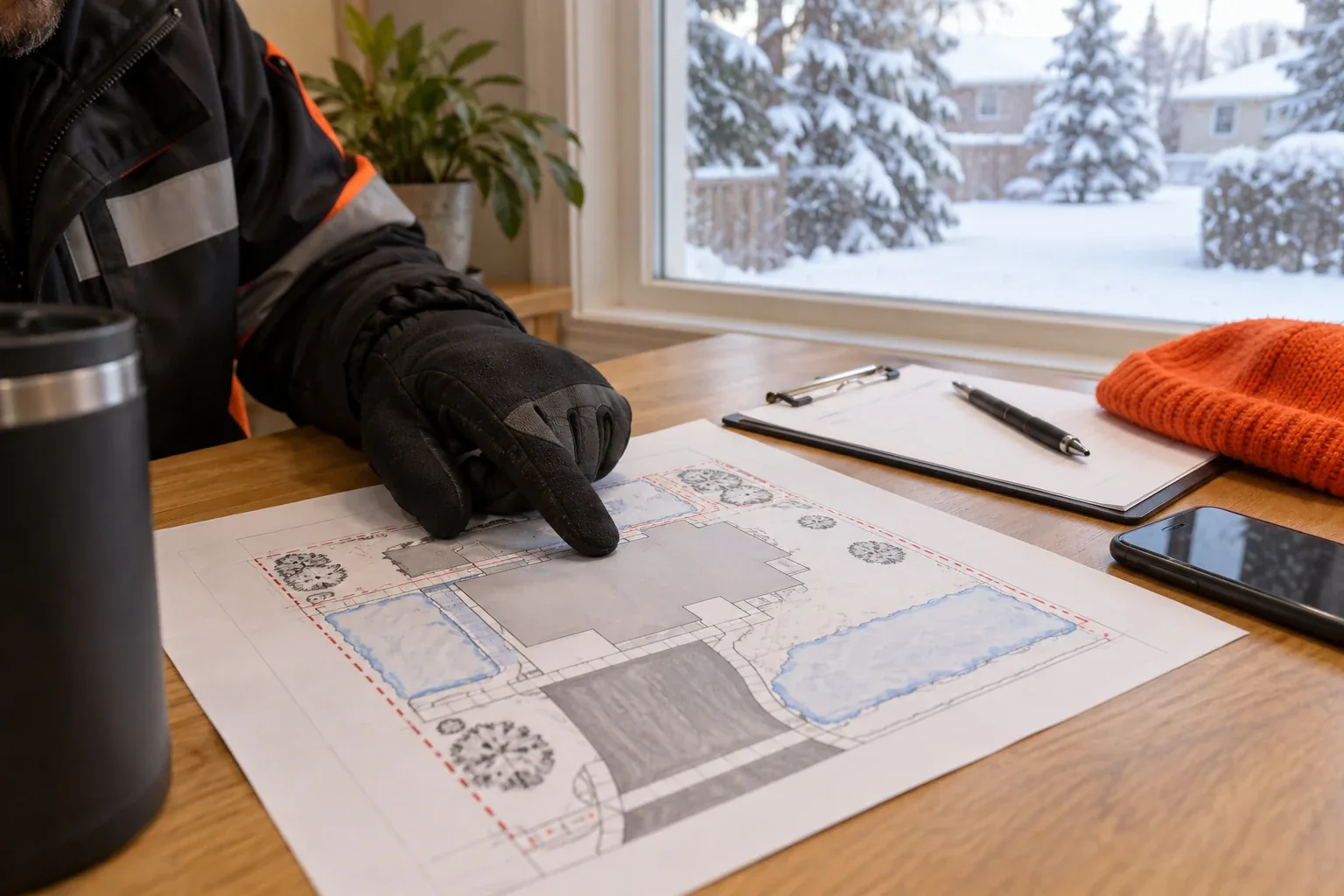
A proposed snow removal agreement covers the measured surfaces, event trigger, completion window and return rules expressly listed for the property. The standard residential category is a single or double garage driveway; public sidewalks, entrance steps, treatment, windrows and extra stalls require separately recorded inclusion and pricing. Commercial zones receive a site-specific scope and price schedule.
How are repeated clearing visits and additional work billed?
The residential proposal charges $25 for a completed clearing property-day rather than for every equipment pass. The signed agreement must define the billing day, attendance crossing midnight and later-day returns. Extra hauling, treatment or surfaces require the authorized contact to accept the additional scope and price before the work is represented as included.
How are access restrictions and winter delays communicated?
A snow removal agreement records the property contact, permitted update channel, vehicle or gate responsibilities and the escalation process for weather or blocked access. A completion record distinguishes completed zones from obstructed zones and records the agreed return action. The preview does not promise an unadopted centimetre trigger, round-the-clock response or uninterrupted access.
How are draft information and service concerns handled?
The local snow removal property-review draft stays in the browser tab until the user downloads it; the preview sends no submission, payment or service message. Before an operating agreement is offered, the provider must publish its verified identity, contact and privacy procedures, written complaint channel, refund timing and record-retention rules.
What should be confirmed before accepting advance payment?
The final provider would need to confirm the actual dispatch and commencement promise, service trigger and property-day definition, route capacity, seasonal dates, full price disclosures, notice channel, refund timing, payment process and any licensing obligations. Alberta’s consumer guidance says statutory rights cannot be waived; the proposal must not be presented as limiting them. The 20% and $400 figures are a business proposal, not figures prescribed by law.
The Alberta unfair-business-practices guidance and Competition Act public-representation provisions are relevant to clear fee and availability disclosures. This draft has not received legal review.
Prepare an unsent property review draft