How much does commercial snow removal cost in Edmonton?
A commercial snow removal total requires the site measurements and service terms. The commercial quote records its own capacity, clearing, treatment and hauling charges.
Canadian providers use seasonal, monthly, per-event and hourly structures. Those structures allocate weather and workload risk differently. Compare the pricing bases and Canadian evidence before choosing the procurement format.
Which site details change the commercial quote?
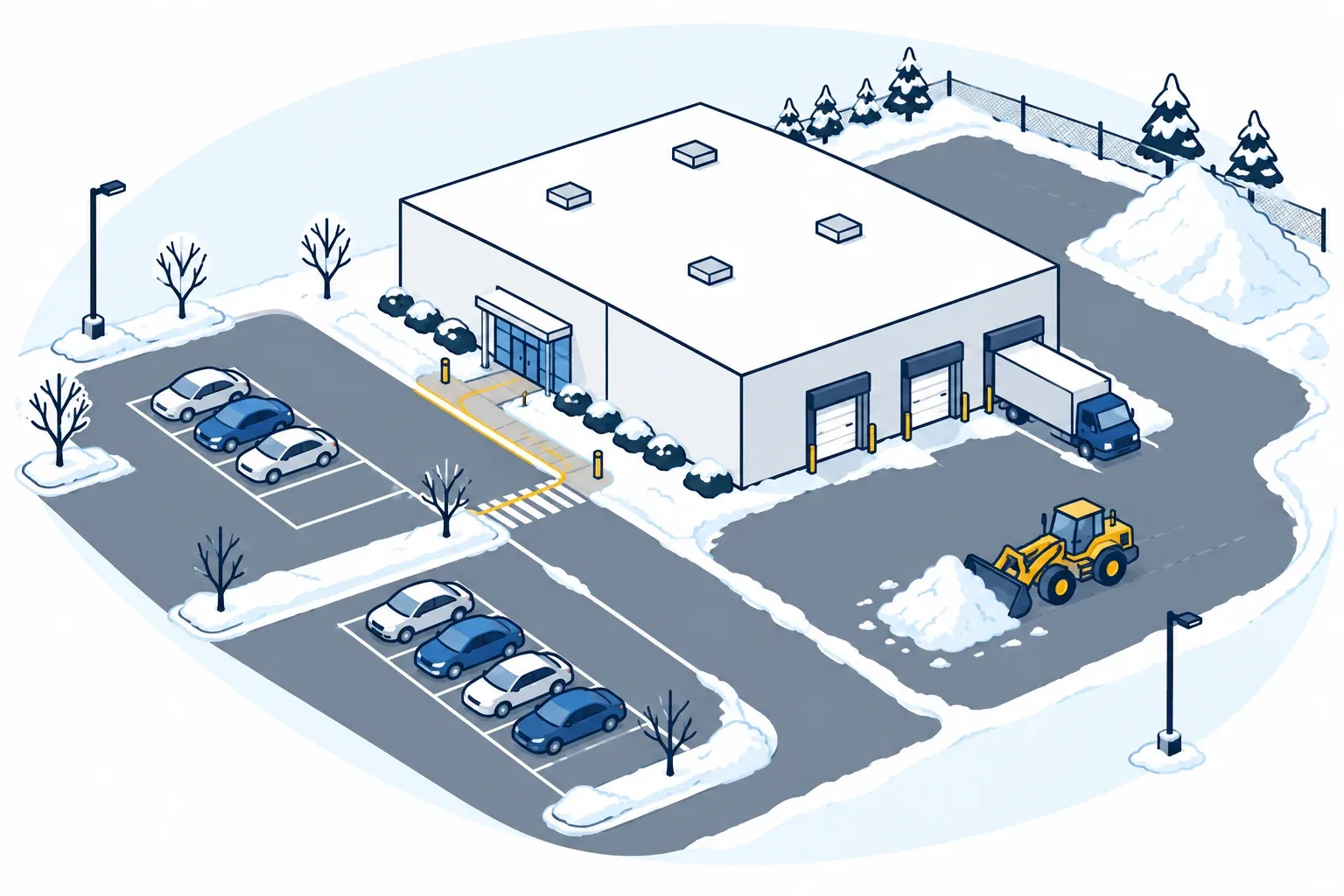
Cleared area, vehicle congestion, pedestrian work, opening hours, storage distance, equipment access and required returns change the work. Snow hauling changes both logistics and disposal cost.
How should a site schedule identify priority zones?
Give each zone a name, map boundary and access need. For example: entrance walk, accessible stall route, loading apron and general parking rows. The order must match the site’s actual opening and delivery schedule.
What belongs in a loading-area requirement?
Record dock doors, truck turning paths, trailer parking and the contact who can move obstructions. A generic “clear the lot” description does not define dock access.
How should blocked access be recorded?
List the obstructed zone, time, contact attempt, work completed elsewhere and agreed return action. Carry that exception into the service record rather than calling an incomplete zone cleared.
What should commercial snow removal procurement include?
Commercial snow removal procurement should include a site map, scoped price schedule, service levels and evidence requirements. Request insurance and WCB documentation from the provider before accepting the contract; this concept makes no claim to hold those credentials.
- Measured vehicle and pedestrian zones, with exclusions marked.
- Season dates, snowfall trigger, ice-monitoring duties and completion windows.
- Snow storage locations, pile limits, hauling approval and disposal basis.
- Equipment access, parked vehicle rules and responsibility for site preparation.
- Fees, invoicing units, material quantities and change-order authorization.
- Incident reporting, damage review, cancellation and severe-weather exceptions.
The written agreement stage turns this checklist into site-specific terms.
How do commercial route rotation and reporting work?
A commercial snow removal contract defines priority zones and completion windows, then explain the planned rotation and escalation when weather or access changes it. A fixed place in a list is not a substitute for an agreed service window.
Use a primary site contact plus an alternate. An event update should state the affected zone and revised window; the completion record should list timestamps, treatment and outstanding access restrictions. Read the proposed dispatch protocol.